
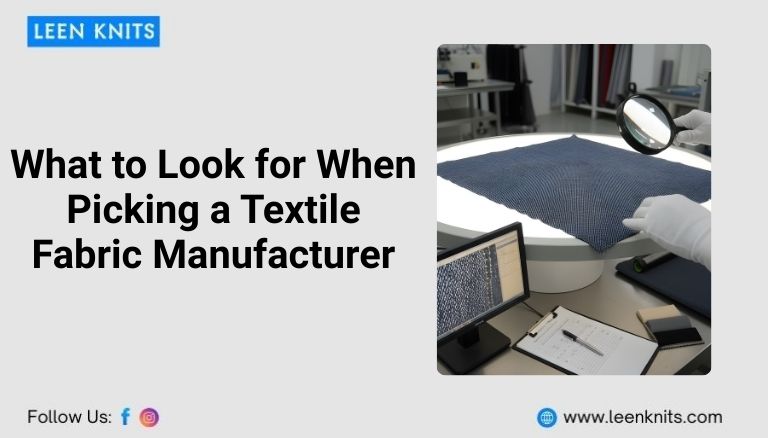
What to Look for When Picking a Textile Fabric Manufacturer
The textile fabric manufacturer you choose affects fabric quality, delivery timelines, consistency, and ultimately how your finished product performs in the market. On paper, many suppliers look similar. But in reality, small differences in process, experience, and communication can create big problems later.
Whether you are sourcing for garments, home textiles, or bulk production, the right textile fabric manufacturer supports growth instead of slowing it down. And understanding what is actually important helps avoid costly trial-and-error and sets a stable foundation for long-term supply.
Manufacturing Capability Comes Before Variety
A wide catalogue means little if the manufacturer cannot produce fabric consistently. The first thing to assess is whether the textile fabric manufacturer controls its production or relies heavily on third parties.
Reliable textile fabric manufacturers invest in in-house knitting, dyeing, and finishing. And this control improves quality checks, reduces delays, and keeps specifications consistent across batches. Plus, it also makes problem-solving faster when adjustments are needed.
For buyers working with cotton knitted fabric manufacturers, this is even more important. Because knit structures react strongly to tension, yarn quality, and finishing methods. Without proper control, shrinkage and distortion become common issues.

Fabric Quality Is About Process, Not Claims
Quality is not defined by marketing terms. It shows up in how the fabric behaves during cutting, stitching, washing and wear. Also, strong knit fabric manufacturers pay attention to:
- Yarn selection and sourcing
- Stitch consistency and fabric density
- Colour fastness and shrinkage control
Instead of asking whether a fabric is “premium,” it helps to ask how quality is tested and maintained. Because knit fabric manufacturers who can explain their process clearly usually deliver better results.
Experience With Your Fabric Type Matters
Not every manufacturer suits every requirement. A supplier experienced in woven fabrics may struggle with knits, and vice versa.
For example, cotton knitted fabric manufacturers understand how different gauges, blends, and finishes affect drape and durability. They also know how fabrics behave across seasons and repeated washes.
Choosing a manufacturer with proven experience in your fabric category reduces development time and avoids costly mistakes during production.
Production Scale and Flexibility Should Match Your Needs
Some textile fabric manufacturers only work well at large volumes. Others specialise in smaller or mid-sized runs. Problems arise when expectations don’t align. And before committing, it helps to understand:
- Minimum order quantities
- Capacity during peak seasons
- Ability to scale up without quality loss
Good knit fabric manufacturers are transparent about limits and timelines. This honesty helps plan production realistically instead of chasing promises that don’t hold.
Communication and Transparency Are Not Optional
Clear communication keeps production on track. Delays, quality issues, and specification changes are easier to manage when the manufacturer responds quickly and clearly. And a reliable textile fabric manufacturer:
- Shares realistic timelines
- Flags issues early
- Provides clear documentation
If communication feels slow or unclear during sampling, it usually worsens during bulk production.
Compliance and Ethical Practices Matter More Than Ever
Today, buyers are expected to know where and how fabrics are made. Ethical sourcing and compliance are no longer optional, especially for export-focused businesses.
Reputable textile fabric manufacturers follow labour standards, environmental norms, and safety regulations. They are open about certifications and audits instead of avoiding the topic. And this protects both your brand and your supply chain in the long run.
Pricing Should Reflect Value, Not Just Cost
Lowest price often hides compromises in yarn quality, finishing, or testing. A slightly higher price from a reliable textile fabric manufacturer usually saves money later by reducing rejections and rework. And instead of comparing rates alone, compare:
- Fabric consistency
- On-time delivery
- Long-term reliability
Value comes from stability and not short-term savings.
FAQs
How do I verify a textile fabric manufacturer’s quality?
Request samples, test reports, and details about production processes. Consistent answers and documented checks usually indicate reliable quality control.
Are cotton knitted fabric manufacturers suitable for export orders?
Yes, if they follow compliance standards and maintain consistent quality. Many Indian manufacturers support export-grade production when processes are in place.
Should I choose a large or mid-sized manufacturer?
It depends on order volume and flexibility needs. Large units suit bulk orders, while mid-sized manufacturers often offer better responsiveness and customisation.
How important is sampling before bulk production?
Very important. Sampling reveals fabric behaviour, finishing quality, and communication efficiency before committing to volume.
Conclusion
Picking the right textile fabric manufacturer is about more than fabric availability. It is about consistency, trust, and the ability to grow without disruption. Manufacturers who control their process, communicate clearly, and understand your fabric needs become long-term partners rather than just suppliers.
For businesses looking to work with dependable textile fabric manufacturers, Leen International Fabrics is the best option. Because we offer the production knowledge, quality focus, and reliability needed to build strong textile foundations with confidence. Reach out today!