
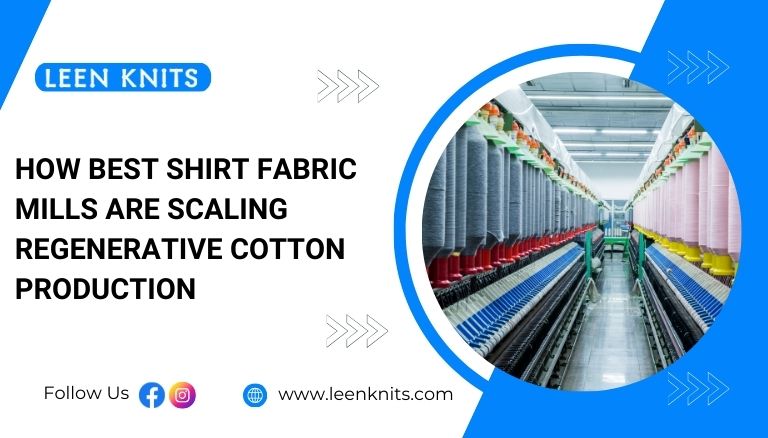
How Best Shirt Fabric Mills Are Scaling Regenerative Cotton Production
Growing cotton the right way is hard. Growing enough of it to supply the world’s best shirt makers is even harder.
But some of the best fabric mills are figuring it out. They are working directly with farmers, taking care of the soil and slowly building a way of making fabric that does not wear the land out. It is neither simple nor fast. But it is working.
Why Regenerative Cotton Is Becoming Important for Shirt Fabric Buyers
Sustainability Pressure From Fashion Brands
Export markets are increasingly demanding traceable and environmentally responsible cotton. Many international brands now have strict ESG targets and sustainability commitments. These goals directly influence sourcing decisions for shirt fabrics.
As a result, mills are being asked to provide clear documentation proving regenerative or low-impact cotton sourcing. For the best shirt fabric mills, demonstrating responsible production practices is becoming essential for maintaining long-term relationships with global apparel companies.
Fibre Quality Benefits for Shirt Fabrics
Regenerative farming often improves soil health, which can lead to stronger and more resilient cotton fibres. Better fibre strength supports consistent yarn production and helps t shirt fabric manufacturers in Ludhiana create smoother and more durable fabrics. This consistency is especially important for large shirt manufacturing runs where uniform fabric performance is required across thousands of garments.

How Fabric Mills Are Expanding Regenerative Cotton Production
Scaling regenerative cotton sourcing requires coordination across the entire supply chain. Mills are building long-term strategies to ensure both sustainability and supply stability.
Building Direct Partnerships With Farmers
Many mills are now working directly with cotton farmers through long-term partnerships. These collaborations often include training programmes that introduce regenerative practices such as crop rotation, reduced chemical use, and soil restoration methods. Supporting farmers in this transition helps best shirt fabric mills secure a more reliable cotton supply while improving agricultural sustainability.
Increasing Certified Cotton Acreage
Another key strategy involves encouraging more growers to adopt regenerative methods. As farmer participation increases, the amount of certified or traceable cotton acreage also grows. This gradual expansion allows t shirt fabric manufacturers in Ludhiana to meet the rising demand from garment exporters without disrupting existing production systems.
Technology for Traceability
Digital technology is playing an important role in verifying regenerative cotton supply chains. Advanced tracking systems allow mills to trace cotton from farm to finished fabric. This transparency helps best shirt fabric mills provide clear documentation to buyers who require proof of sustainable sourcing practices.
What You Should Look for When Sourcing Regenerative Cotton Shirt Fabrics
Buyers looking to work with regenerative cotton fabrics should evaluate several factors beyond sustainability claims. Reliable sourcing requires both transparency and consistent fabric quality.
Verified Certifications and Documentation
The first step is checking for credible certification or documented proof of regenerative or sustainable cotton sourcing. Mills should be able to demonstrate farm-level traceability and supply chain transparency. This documentation helps buyers ensure their products align with global sustainability standards.
Fabric Performance and Consistency
While sustainability matters, fabric performance remains critical. Regenerative cotton fabrics should maintain the same quality benchmarks as premium shirt materials. Buyers should evaluate softness, yarn strength, colour retention, and durability before committing to large orders.
Production Capacity
A reliable mill must also demonstrate the ability to handle bulk production. As sustainability demand grows, best shirt fabric mills need strong operational systems to maintain fabric quality while scaling regenerative cotton sourcing.
FAQs
Is regenerative cotton the same as organic cotton?
No. Organic cotton focuses on eliminating synthetic chemicals during farming. Regenerative cotton goes further by improving soil health, biodiversity, and long-term ecosystem stability.
Does regenerative cotton change fabric quality?
In many cases, regenerative farming can improve fibre strength and consistency. This can support smoother yarn production and maintain the softness expected in premium shirt fabrics.
Can regenerative cotton production meet bulk demand?
Yes. Many mills are expanding farmer networks and increasing certified acreage. This allows them to scale regenerative cotton supply while continuing to support large garment manufacturing operations, including those working with a knitted garment manufacturer in Ludhiana.
Parting Words
Regenerative cotton is gradually transforming the textile supply chain. As global apparel brands push for greater transparency and sustainability, the best shirt fabric mills are adapting their sourcing strategies to meet these expectations. Through direct farmer partnerships, traceability technology, and expanded regenerative cotton acreage, mills are creating a more responsible production ecosystem.
For businesses seeking reliable and sustainable fabric partners contact Leen International Pvt. Ltd.. We support evolving industry demands with quality-driven textile solutions aligned with modern sustainability standards.